Results
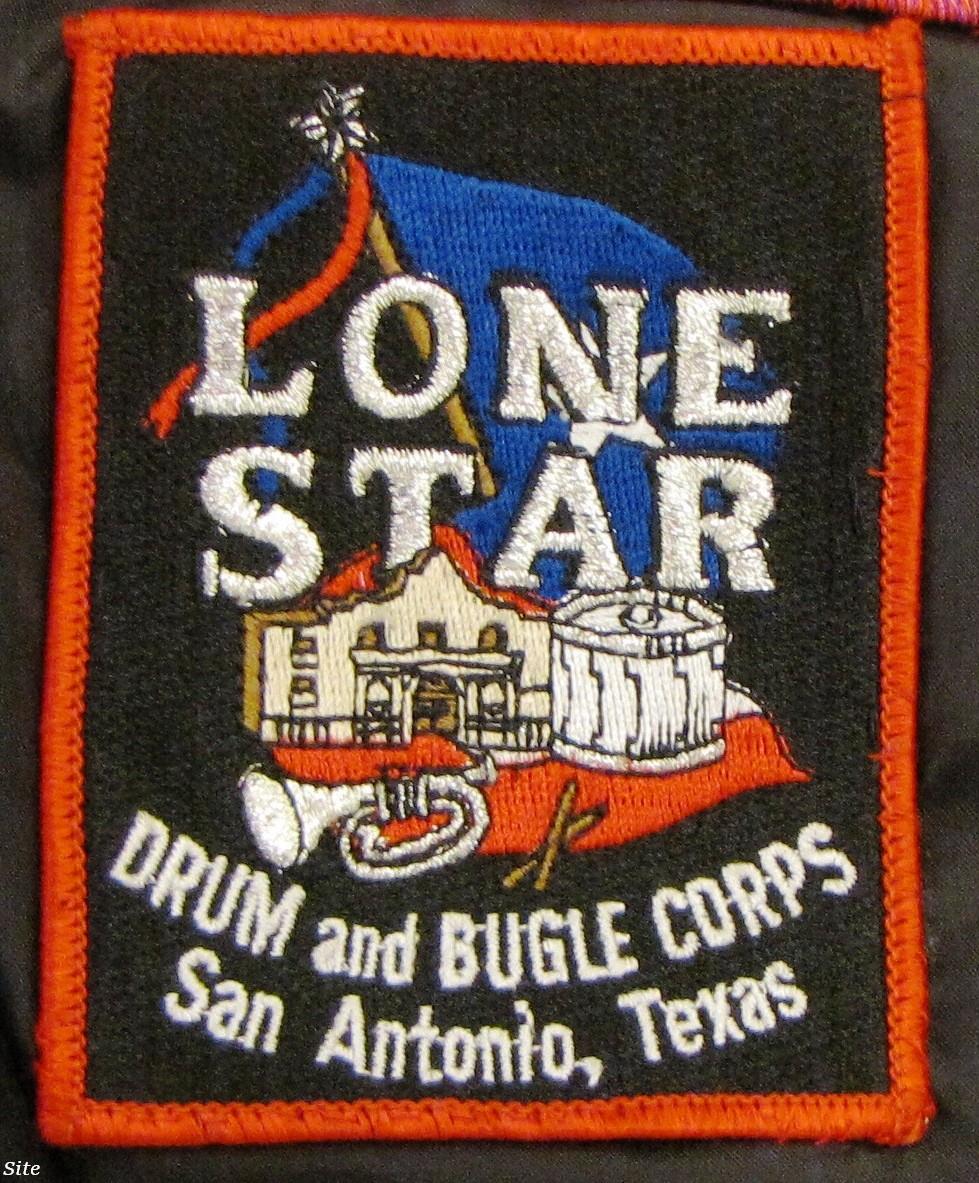
Lone Star
Wichita Falls; San Antonio; Commerce; Houston, TX United States
Founded: 1990

The Lone Star, drum and bugle corps was incorporated in November of 1990 by executive director Jeff Ashlock, a small business owner and corps director Robert Poulin, a former member of the Eclipses of Longueuil.
The corps was a family-run corps in the beginning with Mr. Ashlock’s daughter, who was married to Robert Poulin. Starting humbly with borrowed uniforms and= equipment from the Wichita Falls high school, Lone Star made their debut as a parade corps in 1991, featuring 22 members and playing patriotic music. Late into that summer, the corps decided to add marching to their parade music and competed in their first DCI championships, placing 14th in the “Class A/60”.
The corps went inactive during the 1992 season to raise funds and develop Lone Star into a competitive DCI corps. Bill Carter spearheaded the fundraising, and it was his hard work and dedication to the cause that allowed Lone Star to thrive. Talented staff members from Texas and Oklahoma were brought on board and many instructors, such as brass caption head and arranger Archie Endley, were former members of the Sky Ryders. Marc Servantes was an important and well-respected brass instructor and arranger for the corps in its later years.
In 1993, Lone Star established itself as a competitive touring corps, competing in the Drum Corps South (DCS) circuit and DCI contests leading to the DCI “Division III” prelims, finishing 9th and took 2nd place in brass performance. The year of planning paid off with the 32-member 1993 edition. In 1994, the corps moved to San Antonio & took a great leap forward, swelling to its largest size to that point at 50 members and doubled their touring schedule. The corps competed in DCS and DCI competition as well as Drum Corps Midwest (DCM) contests. The corps ended the season by earning a finalist spot in the DCI “Division III” class and shared the “Division III” high percussion award. Lone Star was probably best known for its drumline, which made its first big impression in 1994 with their performance of “Little Shop of Horrors”, continually out-scoring many “Open Class” corps drumlines.
In view of the fine percussion line, product sponsors like Pro-Mark Percussion, Dynasty Drums and Lone Star Percussion were especially appropriate in the early years. Robert Lazenberry was a well-liked drumline tech during this period and the first guard caption head, John Corollo, designed a unique but very flexible and functional corps uniform, consisting of black trousers and shoes, black gloves and gauntlets, black Aussie-style hats, and white jackets with no accents. Every year overlays for the white jackets were specially created to enhance the theme of that year’s show.
In 1995, the corps took a new turn creatively, performing David Holsinger's "On the Grand Prairie Texas" and after a slow start, the show developed into an excellent production, placing 2nd in the DCS “Division III” circuit, 6th in the DCI Southwestern regionals and 12th in the DCI “Division III” preliminary round. In the local communities, the corps performed in neighborhood parades and standstill concerts. One particularly exciting performance was in the Fiesta Parade in San Antonio.
In 1996, Lone Star moved their base of operation to Commerce, practicing on the campus of Texas A&M, making yet another creative change, turning to a jazz show with the music of Buddy Rich. It was a challenging summer for the corps as many staff changes occurred, however, now performing in the “Division II” class, managed to finish 4th in the DCS circuit as well as finalists in the US Coast Guard (USGC) & Canadian Open “Division II” regionals, placing 3rd & 5th respectively, 6th in the North American Open prelims & 11th in the DCI “Division II” preliminaries.
1997 began very well, moving one final time to the Houston suburb of Deer Park, the percussion section grew to its largest size ever at 26 members, the brass line improved greatly, and the color guard progressed nicely. Things went smoothly through winter and spring, until pre-tour camp when the corps lost a sizeable portion of its membership due to various issues and suddenly, instrumentation changed, drill had to be modified, and music rearranged. Tour improved slowly and life eventually returned to normal, performing music from composer Michael Camillo as they finished the season with a 4th place finish in the DCI Atlantic “Division III” circuit along with 5th & 8th positions in the USGC & Canadian Open “Division III” regionals.
The corps’ last year of competition in 1998, the corps presented music from musician and Entertainment Tonight host John Tesh. In spite of the corps’ small size, they were one of the strongest and popular units in “Division III” with one of the largest and most talented drumlines in their class. Texas group placed 3rd in the DCI Atlantic “Division III” class and earned their last DCI “Division III” finalist spot, placing 7th, taking took 3rd in percussion performance, 5th in ensemble music and the overall performance caption. Lone Star never seemed to have a permanent home. Their original "official" home was
The corps disbanded in 1999 due to a combination of poor winter camp attendance, a lack of secure finances and staffing issues.
In 2019, a Texas non-profit charitable organization based in Fort Worth, Independence Performing Arts, contacted Jeff Ashlock about restoring the corps and with Ashcroft's blessing, Lone Star returned to life in 2019 as a SoundSport team for one season.
Brent Unger, Michael Welge; Paul Legault (DCX)
-
1991 1 scores Final show in DCX Archives August 12, 1991 DCI World Championships Class A60 Prelims Dallas TX placed 14 with a score of 56.000
-
1993 8 scores Final show in DCX Archives August 16, 1993 DCI World Championships Division III Prelims Jackson MS placed 9 with a score of 72.400
-
1994 10 scores Final show in DCX Archives August 16, 1994 DCI World Championships Division II/III Finals Lowell MA placed 5 with a score of 84.800
-
1995 10 scores Final show in DCX Archives August 7, 1995 DCI World Championships Division III Prelims Buffalo NY placed 12 with a score of 79.400
-
1996 17 scores Final show in DCX Archives August 13, 1996 DCI World Championships Division II Prelims Orlando FL placed 11 with a score of 79.300
-
1997 17 scores Final show in DCX Archives August 4, 1997 Greenville MI placed 6 with a score of 74.400
-
1998 12 scores Final show in DCX Archives August 11, 1998 DCI World Championships Division III Finals Orlando FL placed 7 with a score of 83.400
Members (13)
| Member Name | Section | Years Involved | |
|---|---|---|---|
| Ashlock, Adam | Battery | 1991; 1994; 1996 | |
| Ashlock, Adam | Drum Major | 1995 | |
| Ashlock, Adam | Front Ensemble | 1997 | |
| Chenault, Chris "OPUS" | Staff | 1991 to 1995 | |
| Fisher, Mark | Staff | 1995 | |
| Flores, Nicholas | D-Line | 1998 | |
| Green, Chris | Brass Arranger | 2018 | |
| Heming, Richard "Will" | Brass | 1996 | |
| Hensley "Walley", Jeremy | Bassline | 1993 | |
| Kirk, Tahle | Drumline/Drum Major | 1991 to 1998 | |
| Marzett, Michael | Percussion (Snare) | 1991 | |
| Unger, Brent | Staff | 1993 to 1994 | |
| Willingham, Goss | Contra | 1995 to 1996 |