
Results
Miami Rebels
Other Names: Harvey W. Seeds American Legion Post 29; Harvey Seeds Rebels
Miami, FL United States
Founded: 1923
| Year | Position | Score | Theme/Songs |
|---|---|---|---|
| No information available | |||
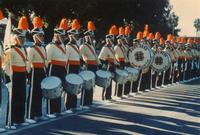
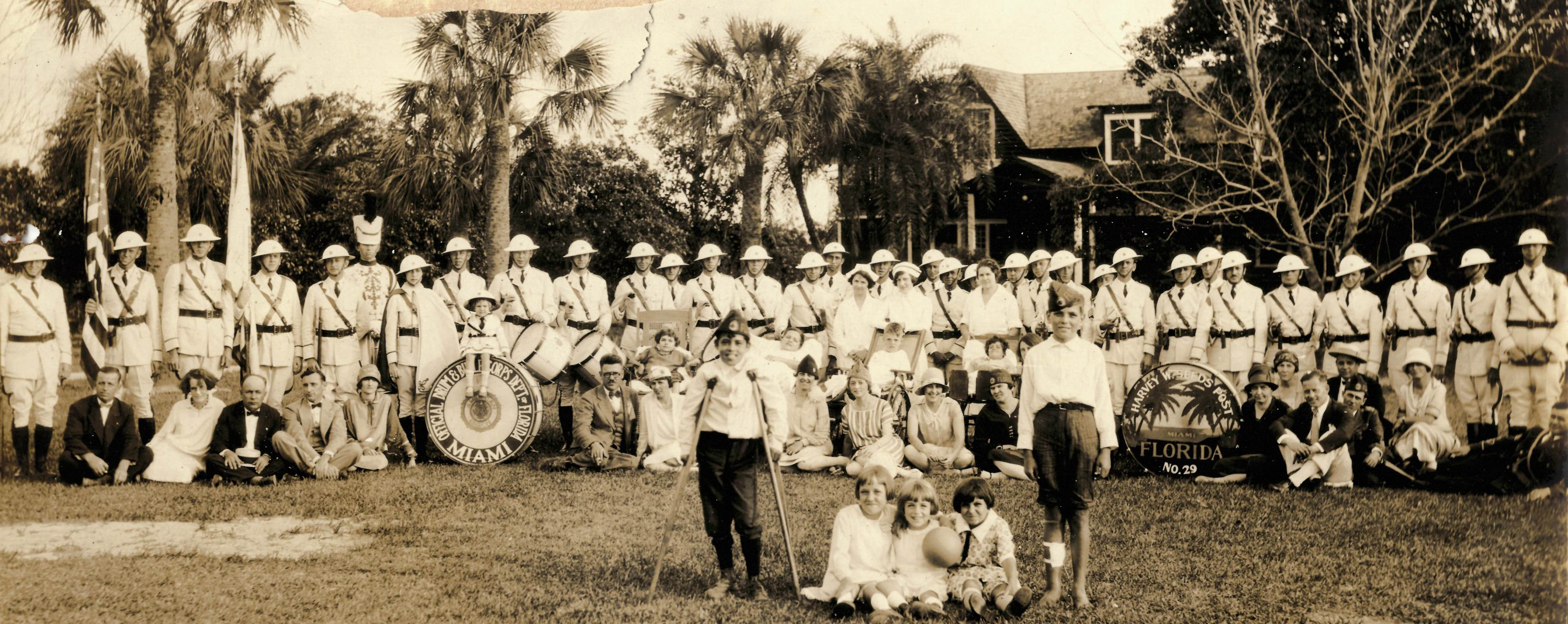
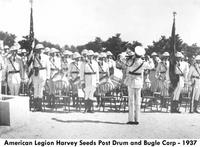
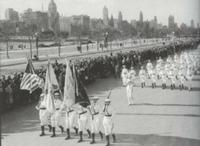
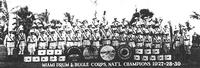
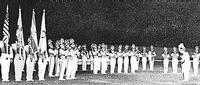
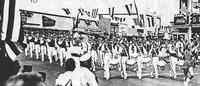
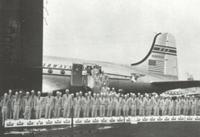
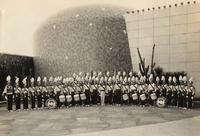
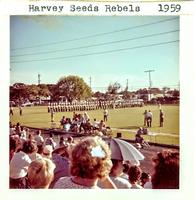
The Miami Rebels drum and bugle corps was originally formed in early 1923 as the Harvey W. Seeds American Legion (AL) Post 29 of Miami.
The corps made its first public appearance on May 30th, 1923, in the Miami Memorial Day parade an entered in their first American Legion Nationals placing in 2nd position. Over the next 3 years, the Post 29 participated in the preliminary rounds of the 1924 to 1926 American Legion Nationals and Harvey Seeds members were part of the recovery efforts after the Great Miami Hurricane of 1926.
Between 1927 to 1931, the Harvey W. Seeds Post captured the AL Nationals’ titles with the exception of 1929, when they participated in the prelims, hosting the 1932 Legion convention. The group once again sent rescuers and supplies to Okeechobee after the 1928 hurricane. In 1933, the Miami American Legion delegation organized the 1933 Florida State convention in Cuba, during prohibition the Florida Legionnaires wanted a “wet” gathering. They flew on Pan American Airways’ newest and largest aircraft, the forty-seat, state-of-the-art, attention-getting Sikorsky S-40 “Clipper.” The contract stipulated that the fifty-one member Harvey Seeds Post got to Havana in time to assemble at the Havana docks to greet steamships carrying hundreds of Florida Legionnaires.
During this time, the Miami unit place third in the 1933 Legion convention but was disqualified due to overtime, once again hosted the 1934 National convention and returned to a finalist position in the 1935 championships, placing 10th. They assisted their brother veterans after the 1935 hurricane and raised money for their burials as well as a memorial. After placing 24th in the 1936 AL preliminaries, sporting the Florida state colors, dark green trousers, cream blouse, and a bright orange sash, the corps finished as a finalist from 1937 to 1947, excluding the World War II years of 1942 to 1945. The Post 29 rankings over that period included 3rd in 1941 & 1946, 4th in 1937 & 5th in 1939, 1940 & 1947. The corps hosted the 1948 & 1951 Legion Nationals and placed 7th and fourth in the 1949 and 1950 finals, respectively.
Since at least 1952, the unit was recognized as the Harvey Seeds Rebels, finishing 2nd in the1952 and 1953 Florida State contests and competed to a 13th place finish in the 1954 nationals prelims. In circa 1955, Harvey Post, now known as the Miami Rebels, finished 11th & 6th in the finals of the 1955 & 1956 AL Nationals respectively. From 1957 to 1961, the Rebels participated in the 1957 and 1961 VFW Nationals, finishing 4th and 3rd respectively and in AL National competition, placed 7th in 1957 and 12th in 1958 & 1960.
On January 8th, 1959, Fidel Castro’s Cuban rebel forces entered Havana and drove the dictatorship Batista regime from the capital and island after many years of jungle-based struggle. Fidel’s staff made the Havana Hilton (now named Hotel Tryp Habana Libre) their provisional headquarters. To celebrate the new power-structure, Fidel declared that the "Mardi Gras" at the end of February 1959 would highlight the liberation and new government.
Several American newspaper article and columns, magazine photo spreads, and television dramas of that time, featured and romanticized the Cuban freedom fighters, including Fidel Castro, his brother Raul, and his lieutenant Che Guevara. The new Cuban government invited the American Legion drum corps to be an honored part of the upcoming "Mardi Gras" parade. They provided air fare and lodging at the Havana Hilton. The first evening, the drum corps enjoyed the hotel casino and floorshow plus duty-free shop (mostly rum and other alcoholic beverages, same as today).
The next morning, the drum corps practiced their stadium maneuvers in the main square in front of the reviewing stand where they would perform for Fidel Castro and his guests. The parade began at
After the corps entered the square and performed, everything stopped while Fidel Castro gave a very, very long speech, something for which he was famous. Some men in the corps understood what was being said in Spanish, whereupon they ordered its color guard to sheaf its colors, and the group marched in close-order back to the hotel. The men quickly packed their bags, some called home to Miami, so that all the families could meet the returning airplane, boarding their buses which returned to the airport with a Cuban military-police escort to protect them from the frenzied crowds. That was probably the last time the American flag was welcomed and proudly displayed in
They disbanded in 1964.
Submitted by Lee Dyer - December 2008; Paul Legault (DCX)
-
1927 1 scores Final show in DCX Archives September 30, 1927 American Legion National Championships Paris France placed 1 with a score of 96.000
-
1928 1 scores Final show in DCX Archives January 1, 1928 American Legion National Championships Unknown
-
1930 1 scores Final show in DCX Archives October 8, 1930 American Legion National Championships Boston MA placed 1 with a score of 93.150
-
1931 1 scores Final show in DCX Archives September 23, 1931 American Legion National Championships Finals Detroit MI placed 1 with a score of 98.000
-
1936 1 scores Final show in DCX Archives January 1, 1936 American Legion National-Prelim Cleveland OH placed 24 with a score of 90.050
-
1939 1 scores Final show in DCX Archives January 1, 1939 American Legional National Chicago IL placed 9 with a score of 91.930
-
1941 1 scores Final show in DCX Archives September 15, 1941 American Legion National Championships Milwaukee WI placed 3 with a score of 91.650
-
1950 1 scores Final show in DCX Archives January 1, 1950 American Legion National Championships Los Angeles CA placed 4 with a score of 86.816
-
1957 2 scores Final show in DCX Archives September 14, 1957 American Legion National Championships - Senior Prelims Atlantic City NJ placed 7 with a score of 85.200
-
1958 1 scores Final show in DCX Archives September 4, 1958 Prelims Chicago IL placed 12 with a score of 78.310
-
1959 1 scores Final show in DCX Archives July 18, 1959 10th Annual Spectacle of Drum Corps LaPorte IN placed 5 with a score of 78.700
Members (4)
| Member Name | Section | Years Involved | |
|---|---|---|---|
| Bowren, Ron | Snare Drum | 1959 to 1960 | |
| Doctor, Dana | Soprano | 1972 to 1973 | |
| Morales, Ralph | Admin | 2015 to 2018 | |
| Sexner-Cole, Robin | Color Guard | 1970 |
No collection items available. Please contact us if you have something to contribute.
